
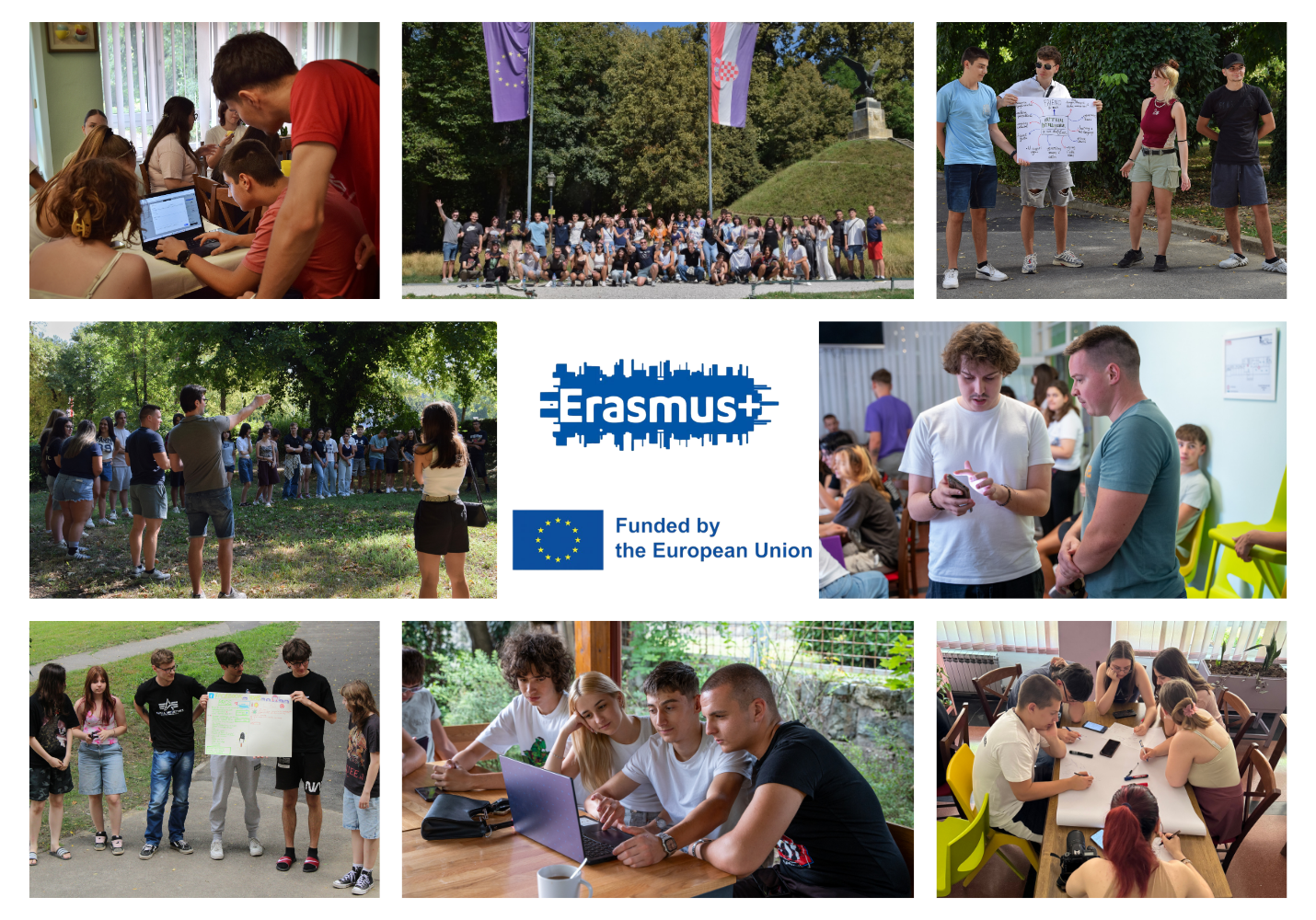
From 26 August to 2 September 2026, more than 50 young people from Croatia, Bulgaria and Serbia took part in the Erasmus+ youth exchange “AI Connect: Bridging Gaps Through Technology” in Zagreb.
The project was coordinated by Taekwondo Club Maksimir from Croatia, in cooperation with 32 Secondary Language School “St Kliment Ohridski” from Bulgaria and AzBuki from Serbia.
The project was funded by the Erasmus+ Programme of the European Union.
From identifying problems to creating solutions
The main goal of the project was to help young people develop practical AI and digital skills while exploring how technology can support greater social inclusion. Participants first learned to identify communication, physical, social and other barriers faced by people with disabilities and people with fewer opportunities. They then worked in international teams to explore how accessible AI tools could be used to address these challenges.
Developing AI prototypes
A major part of the project focused on practical work. Participants developed ideas and AI-based prototypes aimed at solving concrete challenges related to social inclusion. Each team selected a specific problem, explored possible solutions, tested different AI tools and developed a first prototype that could potentially be further improved with additional technical support, testing and development.
Through this process, participants strengthened their:
- digital and AI skills
- creativity and critical thinking
- problem-solving abilities
- teamwork and communication
- presentation skills
- intercultural competences.
Public presentation of the results
On 1 September 2026, participants presented their prototypes during a public event at the Dora Pejačević Student Residence in Zagreb. They explained the problems they had chosen, how they developed their ideas, which AI tools they used and how they transformed their concepts into first prototypes. The event also gave visitors an opportunity to see practical examples of how artificial intelligence can be used beyond chatbots and automation to support socially useful ideas and solutions.
Public event:
Main project outcomes
The project enabled more than 50 young people to gain practical experience with artificial intelligence while developing a better understanding of inclusion, accessibility and international cooperation.
Participants learned that the starting point for using AI should not simply be “What can AI do?”, but rather:
“What problem do we want to solve, and can technology help us solve it?”
Through teamwork, intercultural learning and practical experimentation, the project connected technology with real social needs and encouraged young people to use AI in a responsible, creative and meaningful way.
Please check out photo gallery from our project here: